 Skolera LMS Blog Educational Technology Articles and News

In the era of digital education, LMS platforms for education have become an essential component in enhancing the educational process and improving school management. By combining technology and organization, these platforms help educational institutions provide an integrated learning environment that supports interaction and communication between users and tracks student performance. This makes it easier for school administrators and teachers to manage everything related to students with high efficiency.
Learning management platforms for education allow educational institutions to transform traditional processes into simplified digital tasks that help save time, reduce errors, and enhance the educational experience for both students and teachers.
Book a free demo from Skolera nowTable of Contents
What are LMS in education?
It is an electronic system that helps plan, monitor, and evaluate any educational activity in educational institutions. The system acts as a link between the administration, teachers, students, and parents. The system also assists teachers in creating educational content and assigning homework and tests, where questions can be corrected electronically, while essay questions require manual correction by the teacher; this process ensures fair assessment and allows for monitoring the academic level of each student individually. The system also helps prepare plans for students who are struggling academically, and it helps students access course materials and complete tests and assignments electronically anytime, anywhere. Each system has its own features, which differ from one system to another, as there are simple systems used in training courses and more complex systems with more comprehensive services. These systems are also known as e-learning management systems and are widely used in schools, universities, and even training centers.
read more about: Best Software for Classroom Management | Features & Benefits
Why do you need LMS platforms for education?
Learning management systems are considered to be of great importance in the era we live in, especially education lms platforms, which provide schools with advanced tools to manage teaching and learning, for the following reasons:
- Rapid response: Education is no longer limited to textbooks and classrooms as it was in the past. Due to the technological advances we are experiencing, teaching methods have developed rapidly, and learning management systems have been able to keep pace with developments such as blended learning, which combines in-class student attendance with the use of electronic platforms for assignments and tests.
- Flexibility of the educational process: The learning management system offers flexibility in the educational process, as the system assigns each student an educational plan according to their academic level and provides educational content that suits all students.
- Distance learning: Distance is no longer an obstacle as it was in the past, because the system allows you to attend classes online and complete assignments and exams electronically, and you can communicate with teachers anytime, anywhere in the world.
- Improving the quality of education: The system has helped improve the quality of the educational process by continuously tracking students’ academic levels. This is done by recording the activities carried out by the student within the system and providing detailed reports on the student’s academic and behavioral performance. In this way, educational institutions can make accurate decisions about student performance, and if a student is struggling, the system can develop an appropriate educational plan to improve their academic performance.
read more about: SIS System for Schools: Features, Benefits, and Impact
Most important factors in choosing LMS platforms for education:
When choosing the right learning management system for educational institutions, it is necessary to consider a number of essential features that contribute to an effective and easy digital learning experience for all parties. Modern systems are not limited to providing a platform for e-learning, but also have smart tools that support teachers, administrators, students, and parents, which improve the quality of the educational process and save time and effort. Some of the most important features are:
- Easy-to-use interface: The learning management system features a simple and easy-to-use interface that helps teachers do their jobs without the need for long training or complicated steps to do so. For example, teachers can record attendance and absences within minutes of the start of class, which saves them time and effort and gives them enough time to focus on other educational goals.
- Integration with other systems: The learning management system can be integrated with other systems, such as the SIS (student information system), to show accurate data on student attendance and interaction in educational institutions. This integration helps administrators and teachers track students’ academic performance and behavioral discipline within a single integrated system, which leads to improved quality of education. An example of this is the Skolera system, which combines the learning management system (LMS) and the student information system (SIS) into a single integrated platform.
- Cloud system support: The learning management system can be run electronically on the cloud, which makes it easy for teachers and administrators to access the system anywhere and anytime, without the need to install it on a specific device. The program also makes it easy for parents to view their children’s academic performance from any device connected to the Internet, without the need to install the system on a specific device.
- Mobile apps: The systems allow parents to monitor their children’s academic and administrative progress through apps designed for Android and iOS devices that allow users to access and use the system from anywhere. The system can be used to record attendance and absences, receive notifications, and view daily and monthly reports through the apps.
- Technical support: The system provides 24/7 technical support to all users to solve any problems they face during use, which ensures high efficiency and continuity of work in educational institutions.
- Security programs: The system includes security programs that apply advanced security standards such as encryption (SSL/TLS), multi-factor authentication, and role-based access controls (RBAC). This complies with data protection standards such as GDPR and FERPA to protect all data within the system from cyber attacks. The learning management system’s commitment is not only limited to global security standards, but the system must also support the requirements of the executive regulations for the protection of personal data of students and teachers. The system must also consider the local guidelines in countries such as Egypt to ensure the protection of student and teacher data.
- Customization capabilities: Customization capabilities in learning management systems (LMS) mean that schools can modify templates and functions in a single platform to suit their educational and administrative needs. For example, they can change colors and fonts, add their logo to unify their visual identity, and rearrange the main interface elements to make it easier to access the most frequently used tools. In addition, they can add or hide learning modules according to grade levels or subjects, and edit assessment settings and report display methods. They can also enable or disable features such as forums or chat rooms in accordance with school policy, which gives the educational institution a flexible and convenient digital environment that supports its goals and provides the best user experience.
read more about: Guide to Tracking Student Progress Software in 2025
Can LMS be customized to fit specific educational needs?
Yes, there are many learning management systems in education that offer customizable features:
- Platform interface design: Learning management systems allow schools to redesign the platform interface to suit the school’s visual identity, such as choosing colors that match the school logo or arranging tools and menus in a way that makes it easy for users to access important resources. These aesthetic and organizational touches make the system more appealing and create a familiar digital environment that encourages users to interact continuously.
- User permissions: With this feature, administrators can precisely define permissions for each user group, such as teachers, students, and parents. For example, teachers can view all assignments and tests, while students can only view activities assigned to them, and parents receive performance and attendance reports. This organization ensures the protection of sensitive information and prevents unauthorized access.
- Adding new learning modules: The learning management system allows schools to add innovative learning modules that meet the needs of different subjects, such as virtual science labs that provide students with a safe simulated environment for conducting experiments, training modules in programming and robotics, or even platforms for artistic and musical activities. This variety helps develop students’ skills in practical and interactive ways and makes learning more relevant to real life.
- Customized reports: This feature gives administrators the ability to create customized reports that focus on specific data, such as attendance and absence rates, level of engagement in activities, or academic achievement rates in a specific subject. The format of the reports can also be specified, whether graphical or textual, to make them easier to understand and enable decisions-making based on accurate data to improve the educational process.
read more about: Online Registration Software for Schools: Complete Guide
What are the common challenges when implementing an LMS?
Despite the advantages offered by electronic systems in education, there are several challenges schools face when implementing the system, including:
- Cost of implementation: Building a learning management system requires a huge financial investment at the beginning, because schools need modern technical infrastructure and also spend money on software and technological equipment, which increases the financial cost.
- Shortage of qualified personnel: There is a shortage of personnel qualified to use the system in schools, and some school staff prefer to use traditional methods of working despite the system’s ease of use.
- Hacking: Some systems may be hacked if there are no strong security measures to protect the system and the information it stores.
- Weak Internet infrastructure: In some remote and rural areas, there is often no fast and stable Internet connection
read more about: Why Every School Needs a Students Information System Today?
Key features and functionalities of Skolera LMS:
It is a learning management system in education that helps teachers or department heads create courses for students. These courses contain lessons, educational videos, or reading materials. The system also helps in setting assignments and conducting tests for students to assess their academic level. It also makes it easier for teachers and department heads to communicate with students, whether individually or in groups. The system has features for students, teachers, parents, and subject supervisors, the most important of which are the following:
Teachers:
- Creating timetables: The system helps create a timetable that includes all the tasks that the teacher must perform.
- Tracking attendance and absences: The system helps the administration and teachers record the attendance and absences of students and staff electronically through a card, fingerprint, or through the system on a daily basis in educational institutions. The system also provides daily and monthly reports showing the percentages for each student and employee, whether they are absent without excuse or have repeated absences.
- Setting assignments: Teachers can use the system to set assignments for students and correct them electronically.
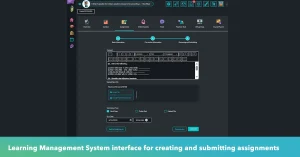
- Test setting: The system helps teachers create tests for students. The Skolera system contains seven types of questions that teachers can use when creating tests for students. The system also includes a question bank that helps teachers design tests.
- Test correction: Tests are corrected electronically, except for essay questions, which teachers must correct themselves, evaluate the student’s answers accurately, and grade them accordingly.
- Creating the class schedule: The system automatically creates the class schedule from the data entered into the system to ensure that there are no errors or confusion in class schedules across different semesters.
- Content creation: Through the system, teachers can create content for students, whether it is written, audio, or video, to ensure that students fully understand the information.
- Teaching plan: Teachers can easily create a teaching plan through the system, which saves them time and effort and gives them enough time to focus on other educational goals.
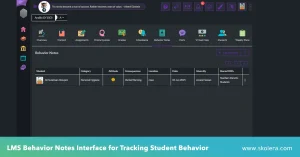
- Behavior notes: Through the system, teachers can record behavior notes for students, whether these notes are positive or negative.
Student:
- Viewing the class schedule: The system contains the student’s personal class schedule, which the student can view.
- Access to educational content: Students can study content from the system anywhere and anytime, whether it is text, audio, or video.
- Completing assignments and tests electronically: Students can complete all assignments and tests electronically through the system.
- Viewing grades and assessments: Students can view their test and assignment grades through the system.
- Electronic library: The system includes an electronic library where students can upload up to five files at a time, with no maximum limit on the number of files uploaded.
- Communication between all parties involved in the educational process: The system provides the possibility of communication between teachers, parents, and administrators with each other, where students can ask questions and discuss topics in the posts module within the system. They can also send messages to communicate directly with teachers when clarification is needed. The system also allows administrators to post notifications and alerts that reach students, teachers, and parents in a timely manner.
Parents:
- Tracking installments: One of the features of the system is that it shows all the financial installments that the parent must pay for the student.
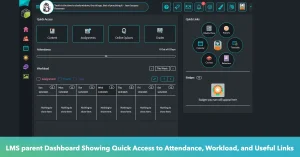
- Receive alerts and notifications: The system has an alert feature that shows parents all of their child’s activities.
- Track academic performance: Parents can track their child’s academic and behavioral performance on a single platform.
- Viewing academic content: Parents can view the content of the student’s studies at school.
- Viewing test and assignment results: Parents can view test and assignment results and find out the student’s academic level through the system.
- Communicating with teachers: Parents can communicate with teachers through the system without any hassle.
- Following up on behavior notes: The system helps parents view their child’s behavior notes.
What makes you trust Skolera LMS software?
Trust in Skolera LMS comes from several factors:
- Strong reputation: Many prestigious educational institutions in Egypt and Saudi Arabia use the Skolera system, including Akhnaton School and the Cairo International School.
- Awards and certifications: Skolera has won several international and regional awards, which have made it one of the most popular LMS platforms:
- Skolera won the Grand User Experience Award from the independent global platform Finance Online.
- Skolera won the Rising Star Award from Finance Online.
- Bahrain Technology Award – 2018
- Skolera was selected as one of the top 20 LMS platforms worldwide by eLearning Industry.
- Positive user experiences: The system has received high ratings from teachers and administrators thanks to its ease of use and clear interface. They also praised its effectiveness in organizing the educational process and improving communication in schools.
- Continuous support: The system has an active technical support service in Arabic that provides quick assistance in solving problems faced by users. In addition, Skolera releases regular updates and continuous improvements to ensure the best performance and security of the system.
- Security and data protection standards: Skolera implements security standards such as encryption (SSL/TLS), multi-factor authentication, and role-based access controls (RBAC), which are integrated with data protection standards such as GDPR and FERPA to keep all data on a single platform safe from cyber attacks. Skolera’s security standards are not limited to global standards; Skolera also supports the requirements of executive regulations for the protection of personal data of students and teachers. Skolera takes into account the local guidelines in countries like Egypt to make sure the data of students and teachers are protected.
FAQ
How do LMS platforms support student-teacher collaboration?
Online learning management systems enable communication between teachers, administrators, and parents, while students can ask questions and engage in discussions in the posts module within the system. They can also send messages to communicate directly with teachers when clarification is needed. These platforms also allow administrators to post notifications and alerts that reach students, teachers, and parents in a timely manner.
What is the most widely used LMS in Egypt?
Skolera is one of the most widely used and popular learning management systems in Egypt because of its compatibility with local school requirements and its support for blended learning.