 Skolera LMS Blog Educational Technology Articles and News

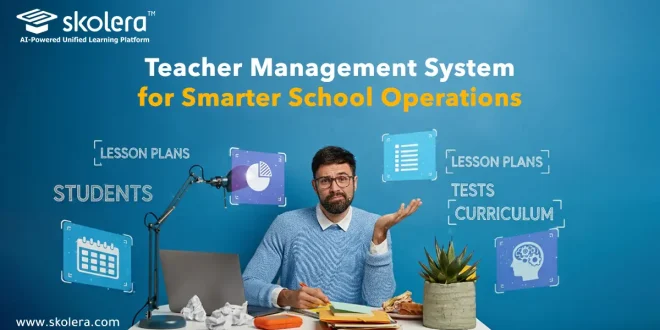
What if the real reason behind declining school performance is not the students, but rather administrative chaos? At a time when the quality of education is measured by precision and efficiency, it is no longer acceptable to manage teacher affairs using traditional, scattered methods. This is where the teacher management system comes in as a solution that restores order. From organizing schedules and tracking performance to facilitating communication and decision-making, the system transforms daily tasks from a burdensome administrative chore into a smart system that supports stability, increases productivity, and enhances the quality of the entire educational process.
Table of Contents
What is a teacher management system?
A teacher management system is an integrated digital framework that aims to organize and manage all processes related to teachers. Its role is not limited to data storage, but extends to planning and monitoring, to ensure performance efficiency. Core Functions Include:
- Organizing class schedules and distributing classes to ensure fairness and minimize scheduling conflicts.
- Managing teacher data, such as qualifications, experience, and employment records, in a centralized and secure database.
- Monitoring and evaluating performance according to clear standards that support continuous professional development.
- Facilitating communication between management and teachers through real-time notifications and reports.
- Supporting recruitment, appointment, and academic assignments with greater efficiency.
- Generating analytical reports that help management make accurate strategic decisions.
- Reducing paperwork and transitioning to an integrated digital environment through teacher management software, which enhances the speed of completion and clarity of procedures.
Why Schools Need a Dedicated Teacher Management System
The success of schools is no longer linked to curricula alone, but also to the efficiency of their internal management. Having a dedicated teacher management system provides the ability to control performance and enhance coordination between departments. Key Benefits Below:
- Improved distribution of classes and schedules, ensuring fairness and reducing pressure on teachers.
- The consolidation of teacher data in a centralized system that is easy to refer to facilitates quick decision-making.
- Monitoring academic and administrative performance according to measurable indicators.
- Enhancing internal communication through accurate and immediate notifications.
- Supporting professional development plans based on factual assessments.
- This approach helps to minimize human errors that arise from paperwork and disorganized files.
- Integrating with digital education systems such as a teacher LMS like Skolera to ensure consistency between the educational and administrative processes.
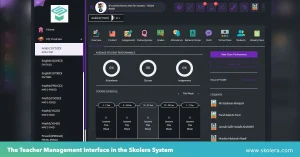
- Enabling management to make strategic decisions based on accurate data and thorough analytical reports.
read more about: HR and Payroll Systems for Schools: Features and Benefits
How Teacher Management Systems Improve School Operations
When teacher management is disrupted, the entire educational system is affected. This is where the teacher management system comes in to reorganize internal processes, transforming complex procedures into clear pathways and giving management a comprehensive overview to see practical results:
- Reducing organizational gaps between management and teaching staff.
- Organizing attendance and daily follow-up processes to a higher degree of accuracy.
- Facilitating the distribution of academic and administrative tasks according to clear priorities.
- Providing real-time data that helps address issues before they get worse.
- Increasing the efficiency of human resource planning within the school.
- Reducing administrative burdens resulting from repetitive manual procedures.
- Supporting full digital transformation through an online teacher management system that allows operations to be managed from anywhere.
- Improving the quality of periodic reports, thereby enhancing internal oversight and strategic decision-making.
read more about: Learning Management Systems for Schools | A Complete Guide
Core Components of a Teacher Management System:
No school can achieve operational discipline without understanding the structure of the system. An effective teacher management system is not based on a single tool but rather on interconnected components that work in harmony. Key Components Include:
- A central database for storing and continuously updating teacher information.
- A flexible system for managing timetables and distributing classes with high efficiency.
- An accurate module for tracking attendance and absences and linking them to official records.
- A performance evaluation mechanism based on clear and analyzable measurement indicators.
- An internal communication system that facilitates the rapid sending of notifications and circulars.
- Detailed analytical reports that support management in making informed strategic decisions.
- Tools for managing training and professional development plans in an organized manner.
- A tiered authorization system that maintains data security and prevents unauthorized access.
read more about: E- learning management system for K12 Schools in Saudi Arabia
Reporting and Analytics for Academic Leadership:
Academic decision-making no longer relies on intuition or experience, but on accurate data and in-depth analysis. Through a sophisticated teacher management system, educational leaders can transform numbers into strategic insights that support planning and increase performance. Key Reporting and Analysis Areas:
- Comprehensive performance reports that show the level of teacher commitment and the quality of curriculum implementation.
- Attendance and leave analyses that reveal recurring patterns and potential areas for improvement.
- Productivity metrics that help evaluate the fair distribution of academic workloads.
- Comparative reports between departments to support decision-making based on data.
- Interactive dashboards that display real-time data in an easy-to-read format.
- Predictive analytics that help anticipate challenges before they occur.
- Regular reports that support senior management meetings by providing reliable data.
- Organized digital archiving that makes it easy to refer to past records when needed.
read more about: ERP for Schools – Features, Modules, and Key Benefits
Key Features to Look for in a Teacher Management System:
Choosing the right system is just as important as the decision to make the digital shift itself. Any effective teacher management system must combine technical flexibility and ease of use, and provide practical tools that support day-to-day management. The important features include:
- A simple user interface that makes the system easy to use without technical hassle.
- An integrated system for managing and quickly updating class schedules when needed.
- A secure database that stores teacher information with clear levels of access.
- Real-time analytical reports that support decision-making based on precise data.
- Flexible performance evaluation tools that can be customized to the institution’s policies.
- A notification and internal communication system that ensures information is transmitted quickly.
- The ability to integrate with e-learning systems and academic platforms.
- Continuous technical support and regular updates to keep pace with technological developments.
read more about: Student Administration Software for Modern School Management
Why Do Schools Choose Skolera for Teacher Management?
When schools look for a true technology partner, they don’t choose a traditional system, but a solution that makes a difference. Skolera offers an integrated teacher management system that combines intelligence with efficiency, for the following reasons:
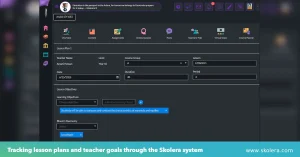
Creating lesson plans:
The system helps teachers prepare lesson plans, saving time and providing a reference for teachers to evaluate their performance.
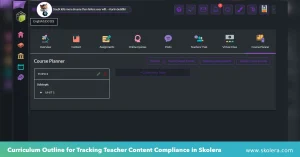
Curriculum management:
The system provides teachers with a tool for managing curricula, which helps them organize courses and divide the curriculum into main topics and sub-units, making it easier to distribute them to classes and easier to follow up on progress.
Notifications:
Supervisors can send notifications when teachers are late or do not upload lesson plans.
Integration:
The teacher monitoring program integrates with the learning management system, which facilitates the monitoring of teacher performance through a single platform.
Book a free demo from Skolera nowFAQ:-
How does a teacher management system support school operations?
A teacher management system supports school operations by organizing data, automating administrative procedures, and providing analytical reports that help management make accurate decisions. It reduces reliance on paper transactions, improves human resource distribution, and enhances coordination between departments, which directly reflects on operational efficiency and the stability of the educational environment.
Is teacher data secure within a teacher management system?
Yes, modern teacher management systems rely on advanced security protocols that include data encryption, multi-level authorization systems, and periodic backups. This ensures that teacher information is protected from unauthorized access.
Can the system manage teaching schedules and timetables?
Absolutely. The system allows for flexible creation and modification of class schedules, minimizing time conflicts and ensuring fair distribution of classes. It also allows for immediate adjustments in case of emergencies, giving administrators complete control over time management and educational resources with high efficiency.