 Skolera LMS Blog Educational Technology Articles and News


Modern technology is rapidly transforming the education sector, as traditional methods are no longer sufficient to meet the demands of the times. With the increasing administrative burdens and the growing complexity of operations within educational institutions, it has become essential to seek smart solutions that ensure efficiency and accuracy. This highlights the importance of automation in education as one of the most prominent trends reshaping the school environment by reducing routine tasks, improving data management, and supporting decision-making. This transformation is not limited to improving performance; it also contributes to creating a more flexible and effective environment.
Table of Contents
What Is Automation in Education?
The concept of automation in education refers to the use of smart technologies to streamline educational and administrative processes within institutions, thereby enhancing operational efficiency and reducing human error, we can examine its most notable practical applications:
- Automated systems help speed up student registration and manage student data accurately, reducing the burden on administrators and freeing up time that can be invested in improving the quality of educational services.
- Learning platforms help organize educational content and deliver it flexibly to meet students’ diverse needs, while enabling continuous performance tracking and results analysis to support decision-making.
- Electronic assessment tools enable quick and efficient grading of exams while providing detailed reports that help teachers understand students’ proficiency levels and accurately identify their strengths.
- Integration with digital education promotes the development of a modern educational system based on speed, flexibility, and straightforward access to information.
raed more about: A classroom management system to support modern schools
Book a free demo from Skolera nowWhy Is Automation Becoming Essential in Modern Schools?
Automation in education has become an essential tool for streamlining educational processes, thereby enhancing efficiency and supporting improvements in the quality of education within schools. To understand its importance, we can review its most notable applications:
Administrative Task Automation:
Automation reduces the time spent on data entry and organizing administrative processes within the school, thereby increasing the efficiency of daily operations.
Assessment and Grading Automation:
Electronic grading tools help evaluate tests quickly and accurately, while providing detailed reports that support improvements in student performance.
Attendance and Student Tracking:
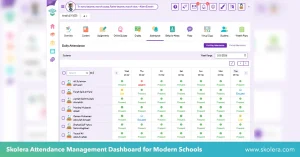
Attendance systems like skolera provide accurate records that facilitate continuous student monitoring, thereby promoting discipline within the educational environment.
Communication and Notification Systems:
Notification systems facilitate real-time communication between the school and parents, enhancing the communication experience and ensuring the swift delivery of important information.
read more about: Student Database Management System for Data-Driven Schools
Data Management and Reporting in Automated Education Systems:
Automation in education represents a significant shift in how data is managed within educational institutions, as it enables the accurate and rapid collection and analysis of information. To understand this clearly, we can review its most notable applications:
- Automated systems enable the integration of various databases within the institution, ensuring a seamless flow of information between departments without conflicts or duplication.
- Interactive dashboards provide a clear visual representation of data, helping departments monitor performance and make quick decisions based on accurate metrics.
- Automation helps create specific reports for each department, whether it’s academic or administrative, which improves the accuracy of analysis and the usefulness of the results.
- Cloud storage technologies help store data securely and make it easily accessible, ensuring business continuity and reducing the risk of data loss.
- Real-time data tracking enables organizations to continuously monitor key performance indicators.
read more about: Education Management Information System for Smarter Schools
Supporting Data-Driven Decision Making in Schools:
The Automation in education has become a pivotal tool that supports schools in making data-driven decisions by providing precise tools for collecting and analyzing information. This helps school administrators better comprehend performance. Here are its key applications:
- Automated systems enable the collection of accurate data on student performance, helping administrations make more precise educational decisions.
- Analytical tools help convert data into clear metrics that support planning and improve overall performance within the school.
- Dashboards provide real-time visibility into performance metrics, accelerating the decision-making process within the educational institution.
- Automation supports the early prediction of educational challenges, allowing for rapid intervention and improved student outcomes.
- Automated periodic reports help monitor overall performance on an ongoing basis, which supports the flexible development of educational strategies.
- Smart systems help accurately identify learning gaps, enabling administrators to make effective decisions to improve learning outcomes.
read more about: Education ERP Software for Modern School Management
Challenges in Implementing Automation in schools:
Despite the importance of digital transformation in the development of schools, its implementation faces multiple challenges related to infrastructure, and training, requiring careful planning to ensure maximum benefit and improve the quality of education and administrative efficiency. Key challenges include:
- Schools face difficulty in providing robust technical infrastructure to support modern systems, especially given limited resources, which slows down digital transformation and affects the operational efficiency of systems.
- High costs represent a major obstacle, as they include software, updates, and training, which requires a long-term investment.
- Some teachers and administrators lack sufficient technical skills, necessitating ongoing training programs to ensure effective use and maximize the benefits of digital solutions.
- Implementing automation in education requires constant system updates and addressing security and integration challenges, which places an additional burden on administration and necessitates careful strategic planning.
read more about: 7 Strategies for Improved Academic Performance in schools
Key Considerations Before Adopting Automation in Schools:
Before adopting smart solutions, the implementation of automation in education requires a careful assessment of the school’s needs and technical capabilities to ensure the best possible return on investment and avoid operational challenges. To understand this clearly, the key considerations are:
- Before implementation, clearly define objectives to ensure the selection of systems that align with the school’s actual needs and support its educational plan without introducing complexity.
- Assess the technical infrastructure and ensure it is ready to accommodate new systems without disrupting daily operations.
- Invest in training for teachers and administrators to ensure the effective use of technologies and maximize their benefits within the educational environment.
- Select flexible systems that can be integrated with existing solutions, ensuring that the system can be easily expanded and upgraded without the need for major changes in the future, such as cloud-based platforms that allow for seamless updates.
How Skolera Drives Automation in Education for Modern Schools:
Skolera offers a cutting-edge model for automation in education, integrating technical and administrative solutions to streamline school operations. This helps improve operational efficiency, supports teachers, and enhances the learning experience in a more integrated and effective way. Its key features include:
- Content Creation: Through the system, teachers can create diverse educational content for students, whether in audio, text, or video formats.
- Schedule Creation: The system helps prepare organized class schedules that include all teacher and student tasks, facilitating effective time management.
- Tests and Assignments: The system allows teachers to create tests and assignments, offering seven question types. .
- Attendance and Absences: The system facilitates the accurate recording of student attendance and absences, providing reports that show attendance rates.
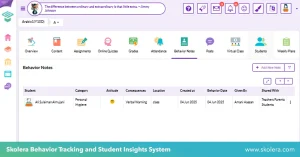
- Behavioral Notes: Teachers can record behavioral notes for students, whether positive or negative, which are sent to the school administration and parents on a regular basis.
FAQ:-
Can education be automated?
Large parts of the educational process can be automated, particularly administrative and repetitive tasks such as student registration, attendance management, and test grading. However, the human role of the teacher cannot be replaced, as human interaction remains an essential element in fostering understanding and developing skills.
What are the benefits of learning automation?
Learning automation offers numerous benefits, most notably reducing the time and effort required for routine tasks, improving operational accuracy, and providing analytical reports that aid in better decision-making, in addition to supporting a more personalized and flexible learning experience for students.
What are the disadvantages of automation in schools?
Despite its advantages, automation faces certain challenges, such as high initial costs, the need for user training, concerns regarding data security, and the potential for over-reliance on technology, which may impact human interaction within the educational process.