 Skolera LMS Blog Educational Technology Articles and News

Behind every grade a student receives lies a story worth understanding, and behind every academic setback lies an opportunity that can be seized before it’s too late. But gaining this insight isn’t achieved through numbers alone; rather, it comes from analyzing data and linking it to the student’s behavior and progress within the educational environment. That is why performance reports have become essential tools that modern schools rely on to understand the reality of learning and make more accurate decisions. Through a student performance report, educational institutions can gain a comprehensive picture of student performance, which helps improve academic outcomes.
Table of Contents
What Is a Student Performance Report?
A student performance report is an educational document that compiles a student’s academic and behavioral data over a specific period, helping schools assess achievement levels and track educational progress more accurately. It includes:
- It provides a comprehensive overview of the student’s performance across various subjects, helping the school understand the student’s strengths and areas for improvement.
- It compiles test and assessment results into a single, organized report, making it easier for teachers to review performance and track academic progress.
- It helps track attendance, participation, and behavior within the school, providing a comprehensive picture of the daily learning journey.
- It supports the preparation of performance reports, helping educational administrators make more accurate decisions based on reliable data.
- It provides data and analytics that help identify academic challenges early on and develop appropriate support plans to improve student outcomes.
How Schools Use Student Performance Reports to Monitor Academic Progress?
Schools rely on student performance reports to continuously monitor academic progress, as these reports provide clear data that helps identify educational challenges early on and take appropriate measures to support students. Among the most notable uses are:
- Measuring the extent to which students are achieving required educational goals by analyzing academic results and comparing different performance levels.
- Identifying areas of weakness that require early intervention, which helps provide appropriate support before challenges escalate.
- Tracking performance trends across different academic terms to understand academic progress and improve future learning plans.
- Enhancing communication between the school and parents through a clear student progress report that presents performance in an accessible way.
- Contributing to raising academic achievement levels by continuously monitoring educational indicators and evaluating the effectiveness of teaching methods.
Read More : Student Information Management System for School Operations
Key Elements Included in a Student Performance Report:
The student performance report contains a set of data and indicators that provide teachers and school administrators with a comprehensive overview of a student’s academic and behavioral performance and their progress throughout the school year.
These elements include:
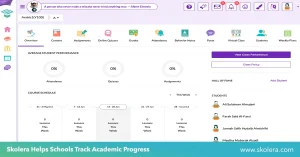
Student Academic Performance Overview:
This section provides a general summary of the student’s academic performance, showing their level of achievement in various subjects and the progress they have made during the academic year.
Assessment and Exam Results:
This section displays the results of various tests and assessments, helping to measure the student’s understanding of the course material and their ability to apply the knowledge they have acquired in diverse educational situations.
Attendance and Participation Records:
This section focuses on attendance rates and classroom participation, showing the student’s commitment to the educational process and its impact on their overall academic performance.
Behavioral and Classroom Performance Insights:
This section addresses the student’s behavioral aspects in the classroom, such as discipline, interaction with teachers and peers, and the ability to work as part of a team.
Teacher Feedback and Recommendations:
Includes teachers’ observations and professional recommendations that help guide the student toward improving their performance and continuously developing their academic skills.
Read More : Best Digital Tools for the Classroom in Modern Schools
The Role of Student Performance Reports in Data-Driven Education:
The student performance report plays a crucial role in supporting data-driven education, as it helps educational institutions transform academic information into practical insights that support the improvement of learning outcomes. Among its most important roles are:
- Providing accurate data that supports academic planning and helps teachers develop more effective teaching strategies.
- Improving teaching strategies based on students’ actual performance rather than relying solely on general observations.
- Monitoring the effectiveness of educational programs and various interventions to ensure that desired outcomes are achieved and to improve the quality of learning.
- Fostering a culture of continuous improvement within the school by relying on clear and measurable performance indicators.
- Facilitating the preparation of periodic reports for educational administrators and stakeholders, thereby providing a clearer picture of overall performance levels and academic achievement trends within the educational institution.
How Reporting Analytics Support School Leadership Decisions:
Data extracted from student performance reports helps school administrators make more informed decisions regarding curriculum, resource allocation, and the development of educational plans. These benefits include:
- Analyzing trends related to student performance to identify recurring challenges and opportunities to improve educational outcomes.
- Evaluating the effectiveness of educational programs and initiatives by analyzing data and measuring their impact on academic achievement.
- Optimizing the allocation of academic and administrative resources to ensure that support is directed to the areas of greatest need within the school.
- Supporting long-term strategic planning by providing accurate insights that aid in making informed decisions.
- Contributing to the preparation of comparative reports across different grades or academic levels, which helps measure overall performance and identify areas requiring further development and support.
Read More : Education Management Information System for Smarter Schools
How Skolera Supports Student Performance Reporting in Schools:
Skolera provides advanced tools for automatically managing and generating student performance reports, making it easier for schools to track student performance, analyze results, and share reports with stakeholders. Key features include:
- User-Friendly Interface: The system features an intuitive interface that displays its main functions. Skolera also supports three languages: Arabic, English, and French.
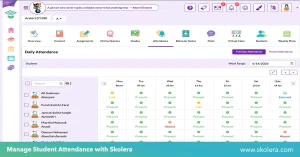
- Attendance and Absence Management: The system provides reports detailing absence rates and sends notifications to parents when a student is absent without a valid excuse.
- Lesson Planning: The system helps teachers prepare comprehensive lesson plans for the curriculum, freeing up significant time for teachers.
- Assignment and Test Creation: The system helps teachers create and grade assignments and tests electronically, with the exception of essay questions, which are graded by the teacher, ensuring fair assessment.
- Student Behavior Assessment: Skolera helps teachers organize and categorize student behaviors, whether positive or negative.
FAQ
Can performance reports help identify learning gaps?
Yes, performance reports help identify learning gaps by analyzing test scores, homework assignments, attendance, participation, and teacher observations. By reviewing this data holistically, schools can identify areas of weakness early on and develop personalized support plans to help students improve their academic performance.